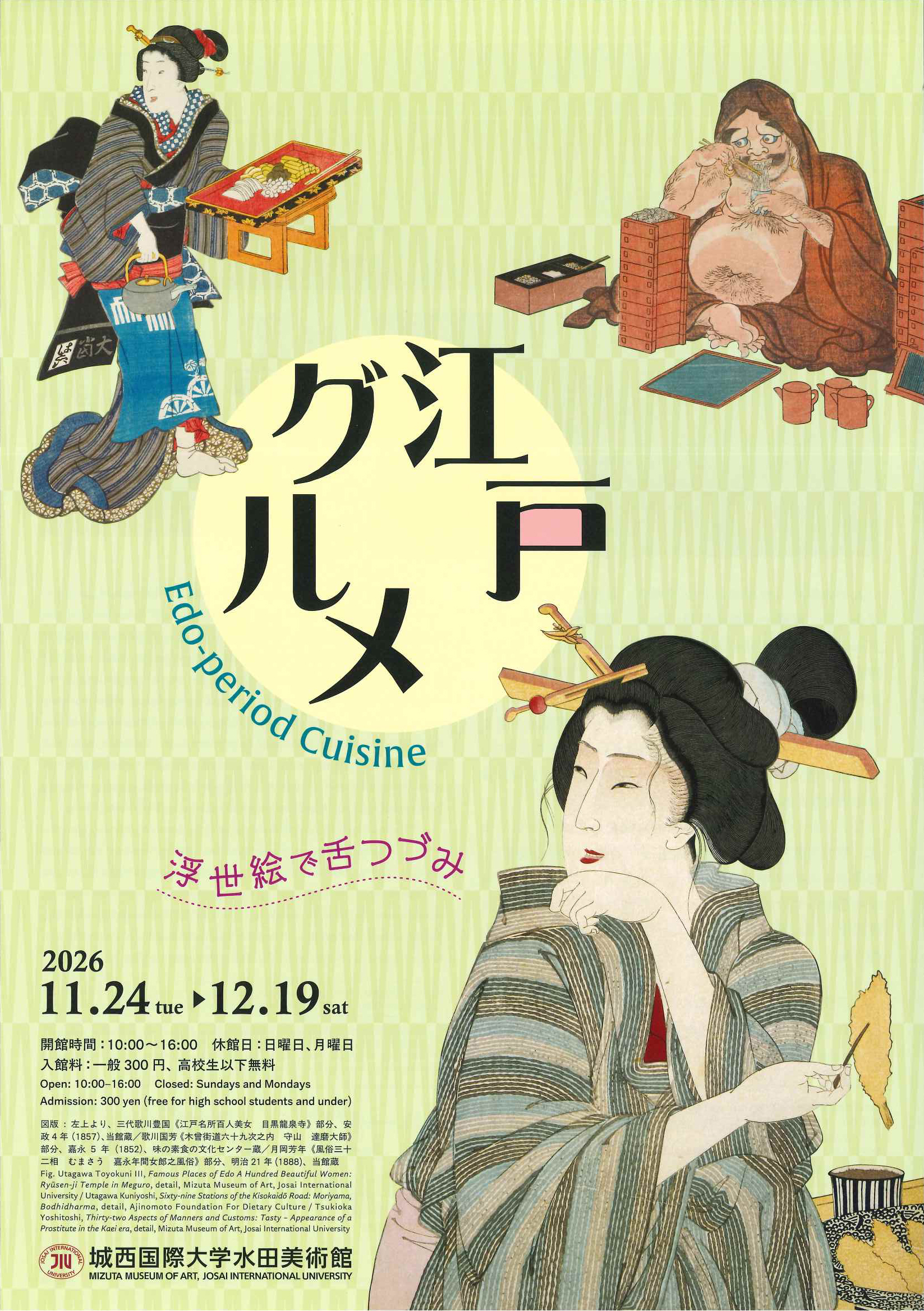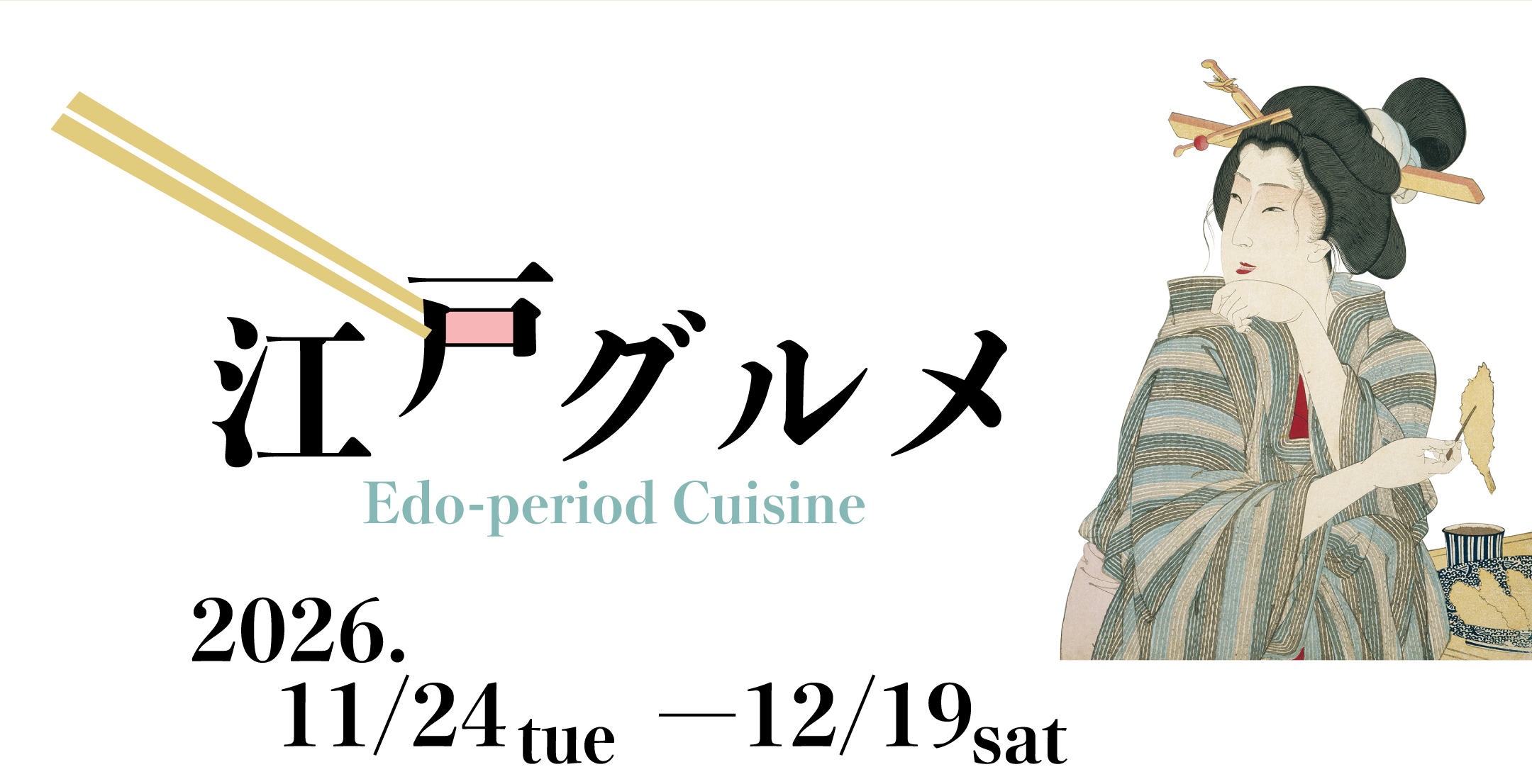
A vibrant food culture blossomed during the Edo period, an era of stability. The advancement of agriculture and fisheries and the development of roads and water transportation networks made it possible to transport regional produce and seafood to major cities for widespread distribution. Seasonings like soy sauce, vinegar and mirin, along with dashi stock made from kelp and bonito flakes, became widely accessible, leading to the creation of culinary methods that endure to this day, including the methods used to prepare sushi, tempura, soba and grilled eel. As culinary techniques spread through the publication of cookbooks, a diverse culture of dining out flourished at places ranging from casual food stalls and teahouses to eateries and fine restaurants.
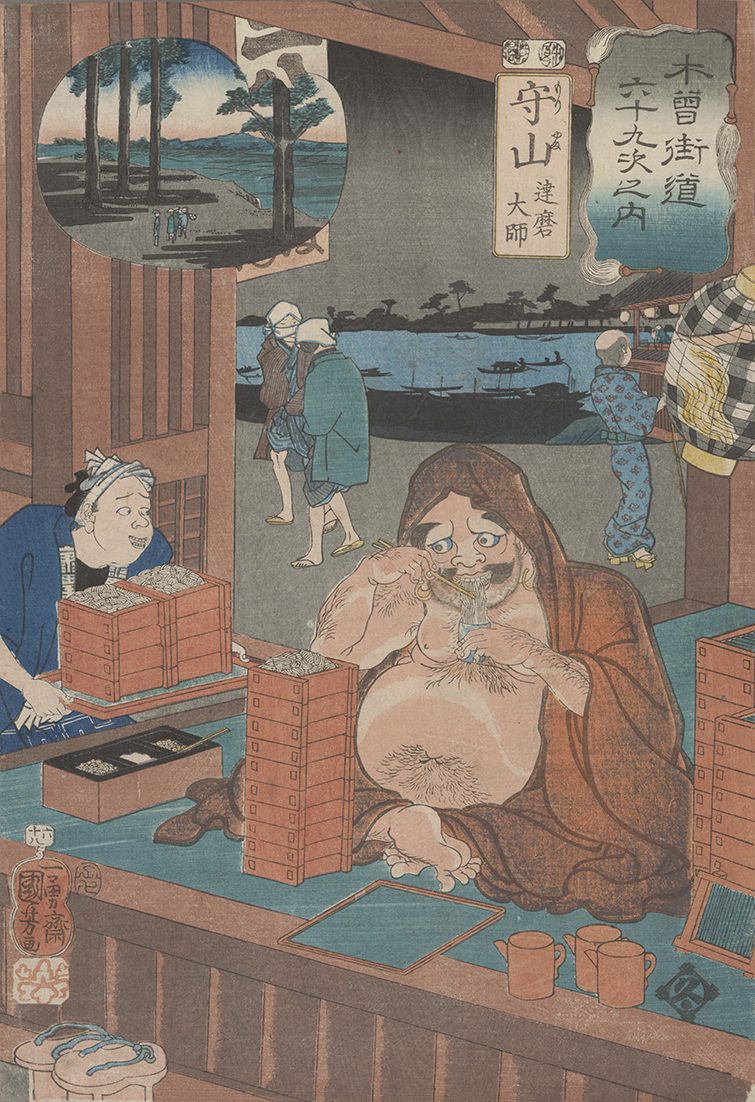
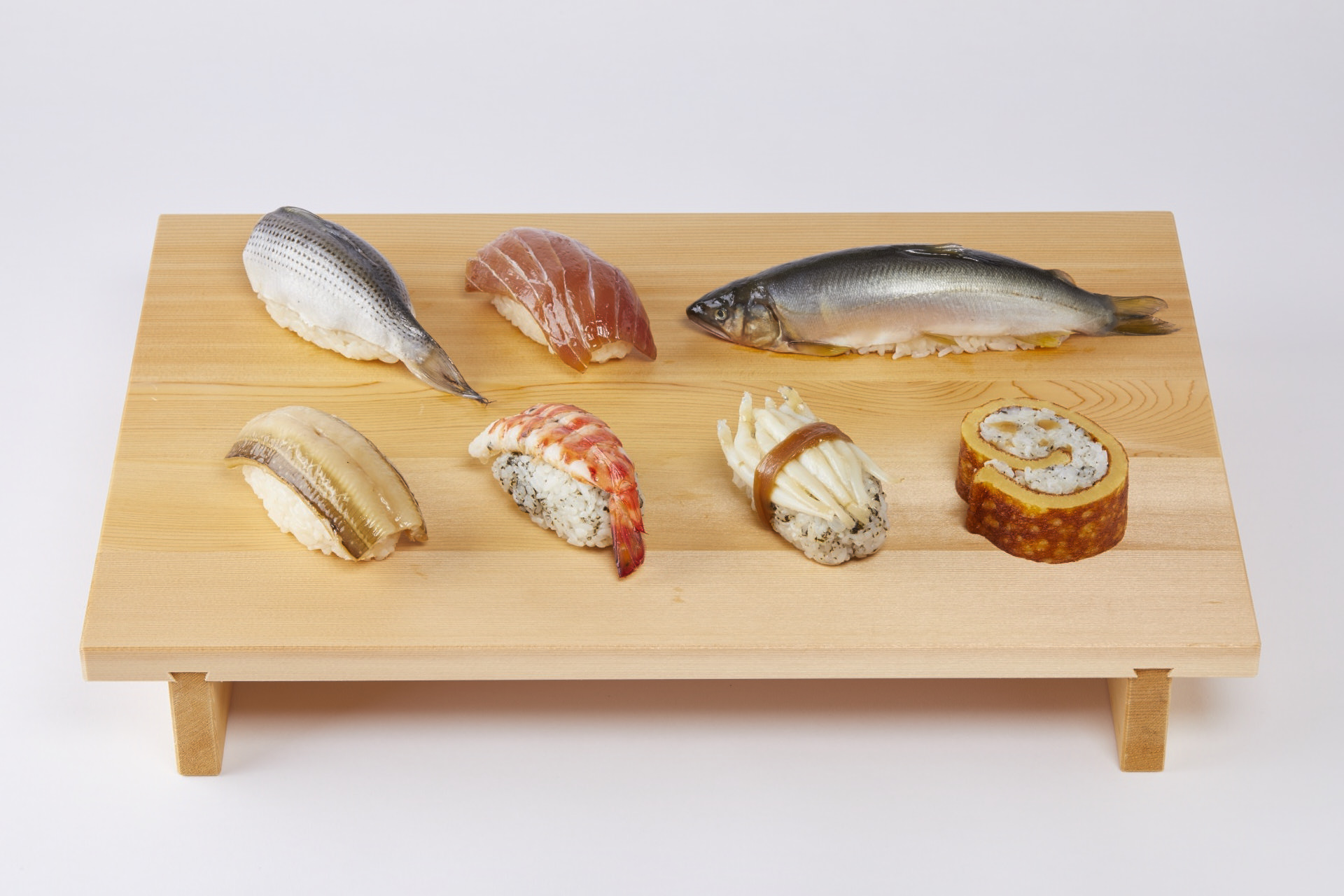
This is an exhibition of the cuisine portrayed in ukiyo-e. Ukiyo-e prints vividly show how people enjoyed food during seasonal events and outings, such as bentō during spring flower-viewing, chilled fruits and shiratama rice dumplings during the summer heat, and moon-viewing banquets in the autumn. Replica models of foods recreating what the dishes actually looked like during the Edo period will also be on display. We invite you to visually savor the dishes the people of Edo enjoyed.
Tsukioka Yoshitoshi, Aspects of Manners and Customs: Tasty – Appearance of a Prostitute in the Kaei era , detail, Mizuta Museum of Art, Josai International University
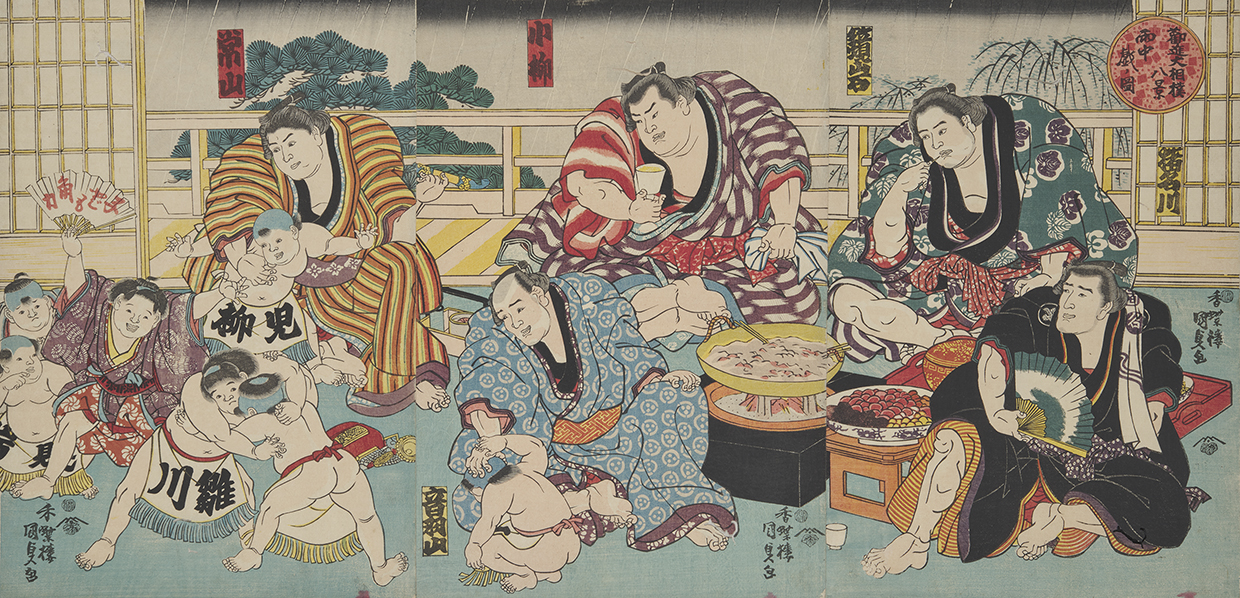
Utagawa Kunisada, Eight Views of Sumō Fund-raising Tournament: Frolicking in the Rain, Mizuta Museum of Art, Josai International University
Utagawa Toyokuni III (Kunisada), Famous Places of Edo A Hundred Beautiful Women: Ryūsen-ji Temple in Meguro, Mizuta Museum of Art, Josai International University
Replicas of Edo-period nigiri sushi, Ajinomoto Foundation For Dietary Culture