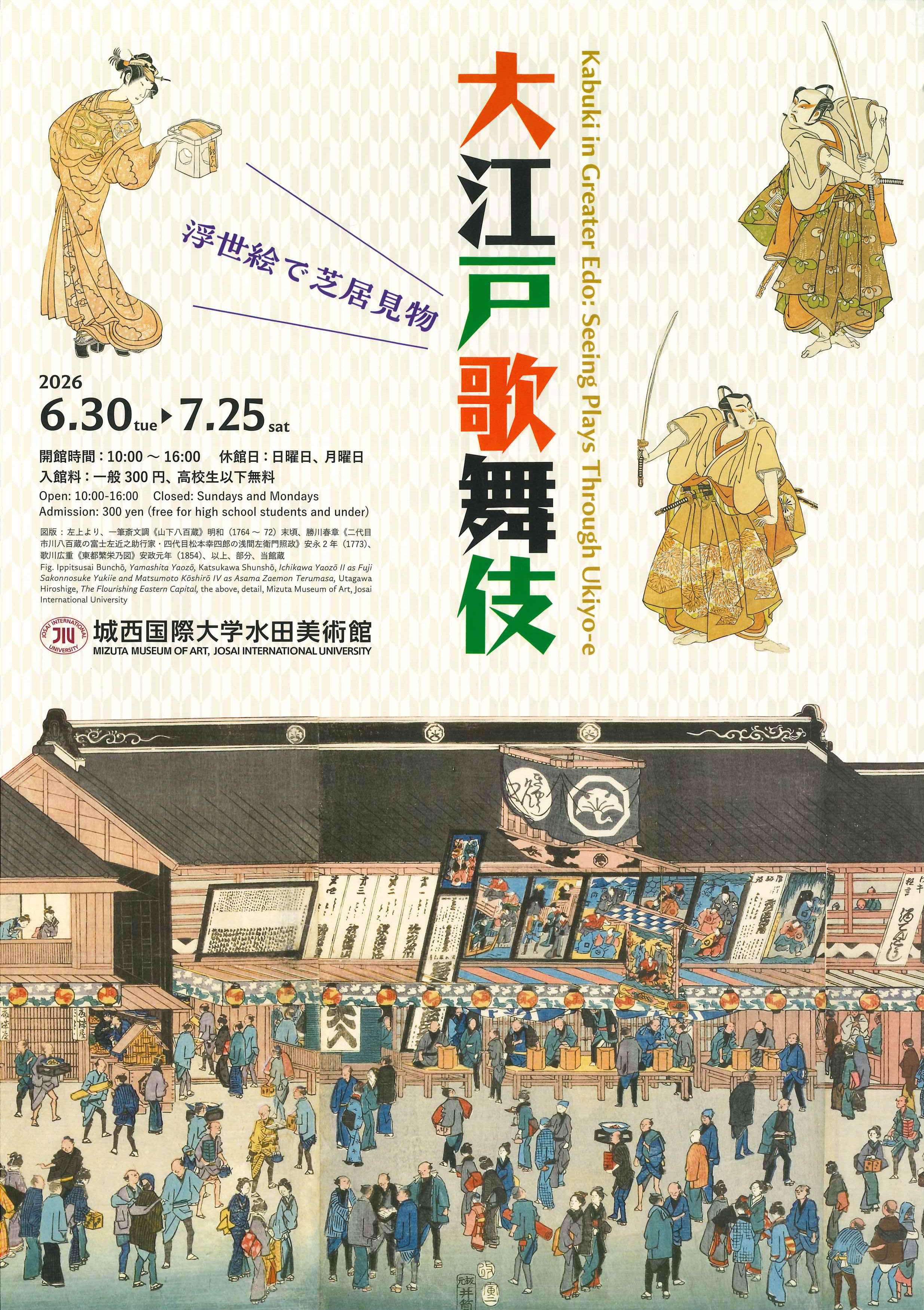
One of the most popular pastimes in the Edo period was watching kabuki plays. With a yagura tower on the roof of the theater and rows of signboards along its facade, the kidogeisha (doormen) at the theater's entrance would call out to customers, creating an exciting atmosphere. Typically, Kabuki plays were presented from around 6:00 until around 17:00. The common people occupying the box seats on the floor and the wealthy VIP audience looking down from the balcony seats would spend the whole day enthusiastically enjoying performances by their favorite actors over sweets and bento box lunches.
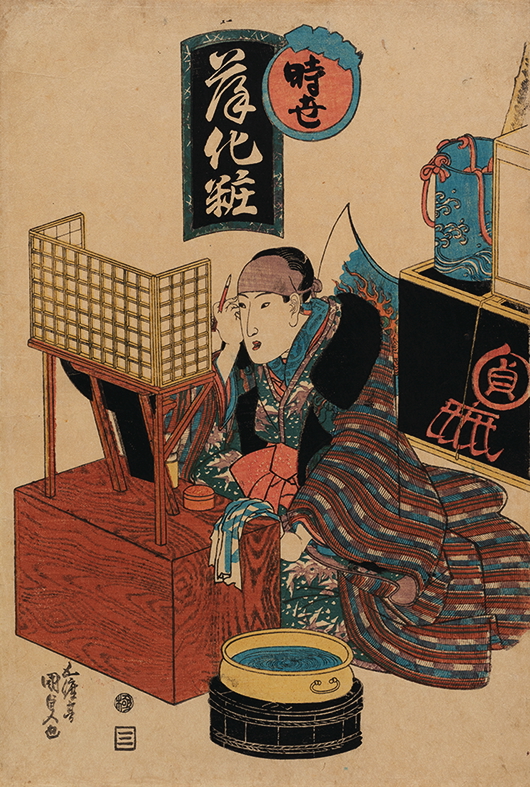
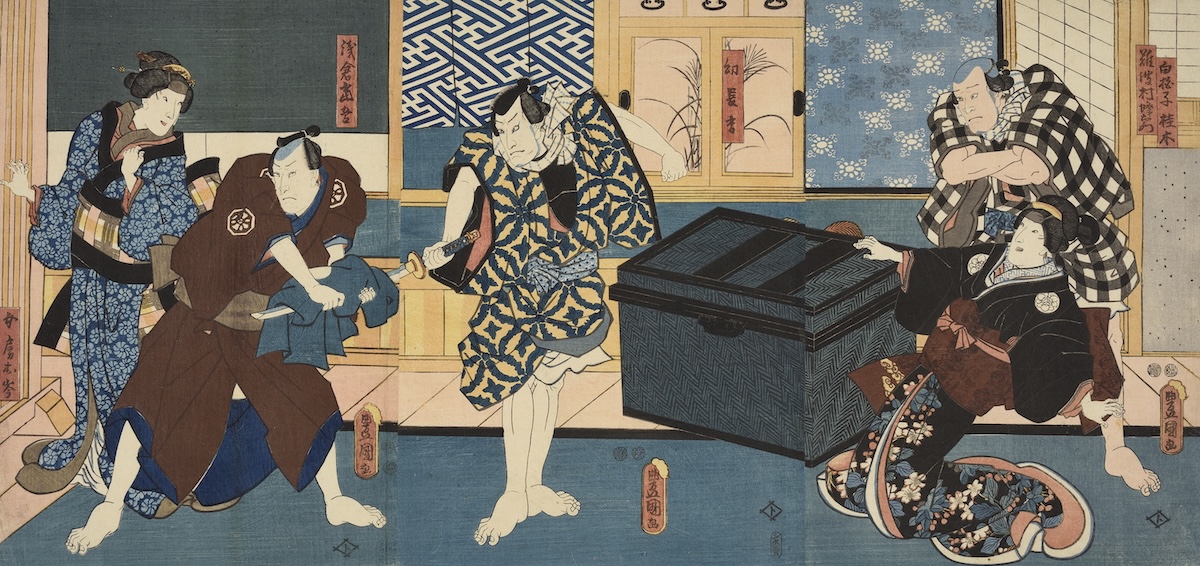
Due to the popularity of kabuki plays, ukiyo-e prints depicting kabuki actors performing on stage flew off store shelves. Yakusha-e (actor prints) were portraits of actors equivalent to today's photographic portraits of celebrities. Bare-faced actors in dressing rooms and rehearsals were also depicted in prints that appealed to fans. Yakusha-e goods were also popular at that time. These goods included uchiwa fans with actor prints on them that could be carried around, and toy prints, such as papercraft dioramas and sugoroku board games.
This exhibition includes portraits of kabuki actors and other ukiyo-e prints that depict the bustle of the Shibaimachi theater neighborhood, which was a major entertainment district, and the backstage areas of kabuki theaters. Enjoy the captivating world of Edo-period kabuki.
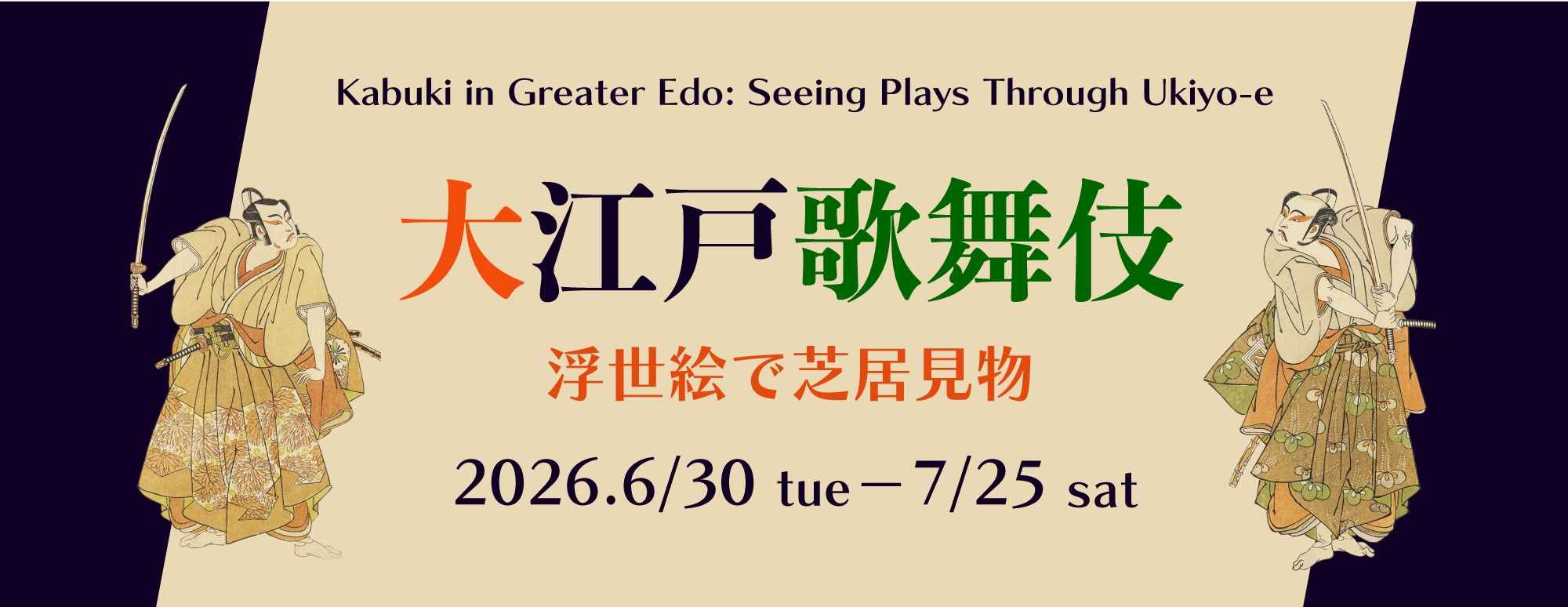
Katsukawa Shunshō, Yaozō II as Fuji Sakonnosuke Yukiie and Matsumoto Kōshirō IV as Asama Zaemon Terumasa, detail, 1773, Mizuta Museum of Art, Josai International University
Utagawa Kunisada, Light Makeup of Present Times, 1818-30, Mizuta Museum of Art, Josai University
Utagawa Toyokuni III, Shirabyōshi Kashiwagi, Nanbamura Hachiemon, Maboroshi Chōkichi, Asakura Tōgo, and Wife Omine, 1851, Mizuta Museum of Art, Josai International University
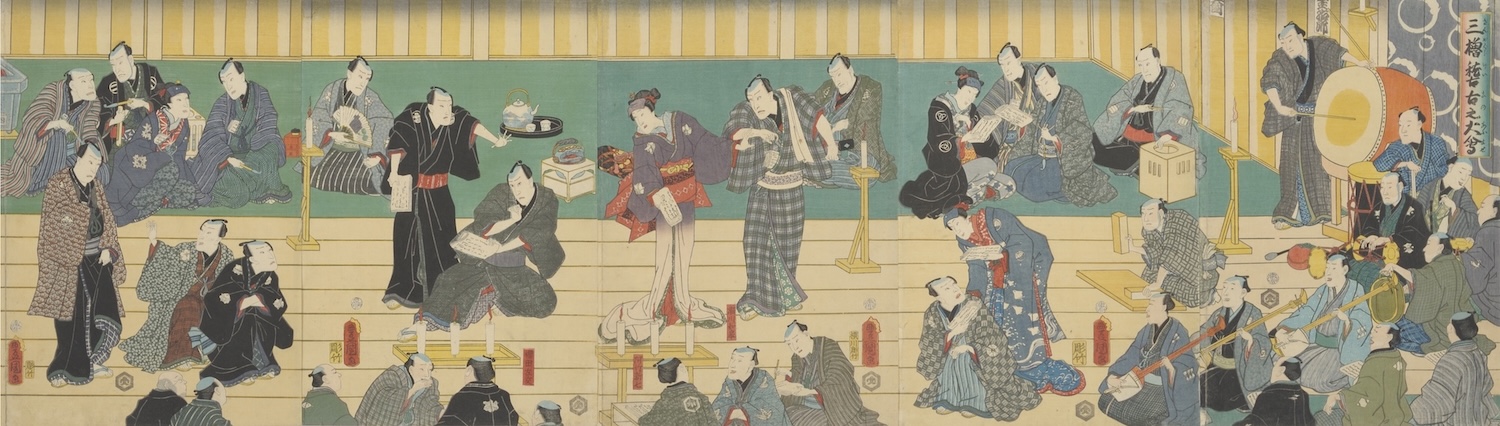
Utagawa Toyokuni III, Three Troupe Joint Practice, 1860, Mizuta Museum of Art, Josai International University