JIU Josai International University

Shibuya Ward's serious garbage problem is recreated in a board game
Faculty Department
2026.01.29
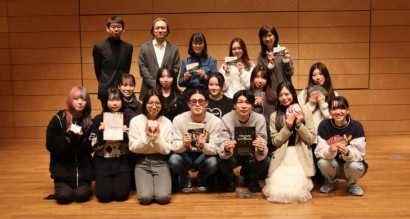
Students and stakeholders
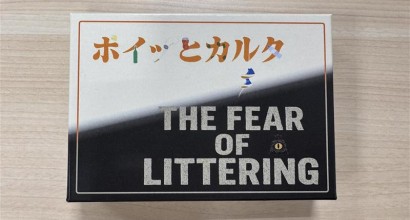
Two commercialized works
Fourteen third-year students majoring in "Entertainment Management" in the seminar of Associate Professor Takuya Hoshino of Faculty of Media Studies have produced two board games, "Poitto Karuta" and "The Fear of Littering," which focus on the "garbage problem" in Shibuya Ward, Tokyo.
Focusing on the serious garbage problem facing Shibuya, a center of youth culture, the project identified the current situation in which approximately 3.6 tons of garbage is generated overnight, particularly during events such as Halloween, as a "challenge." This initiative was undertaken with the aim of not only conducting cleanup activities, but also building a system in which participants could gain a firsthand understanding of the problem and develop a proactive awareness of how to solve it.
This activity was one of the initiatives funded by the "Learning Research Activity Grant Project," which supports student Research activities.
The students set a theme for April 2025, and in May they visited Shibuya Center Street and participated in the Shibuya Good Manners Project promoted by the Shibuya Future Design Association, picking up trash for about an hour. From June to July, all 14 students shared ideas and held repeated discussions from the perspectives of feasibility and effectiveness, narrowing down 14 project proposals to five.
The team split into five groups and began production between September and October. They then held a test play event for visitors to SOCIAL INNOVATION WEEK 2025 (organized by Shibuya Future Design General Incorporated Association, co-organized by Shibuya Ward) on October 30th, where they gathered feedback. They also held a test play event for visitors at the university's 3J festival, held on November 7th and 8th. A total of approximately 100 people participated in the three test play events, and based on the voting results at each event, the two titles were finally commercialized.
The completion ceremony and hands-on experience event, held on January 22nd at Kioicho Campus in Tokyo, began with Associate Professor Hoshino explaining the purpose of the project and its aims for social implementation: "We utilized entertainment theory, which is a characteristic of learning in the Faculty of Faculty of Media Studies, and gamification as an application of system design and management studies, to create a serious game as a means of raising awareness of 'making it personal'."
Shinko Nagata, director of the Shibuya Future Design Association, which cooperated with the project, said, "I think it's a wonderful initiative that started in April and has seen so many ideas come to fruition. Through our activities, we would like to use this game as an opportunity to promote communication."
In addition, Yasuhide Ishigami of Gamify Japan, who provided technical guidance and supervision, commented, "Even among the ideas that did not make it to commercialization this time, we saw many unique ideas that were unique to the students. The fact that each student was able to come up with an idea was a good opportunity, and I feel that each student was able to express their own thoughts and create a product that they were satisfied with."
代表を務めたメディア学部3年の小田川楽空さんは、「最初は単にゲームという感覚でしたが、渋谷の街で吸い殻や汚れたペットボトルを拾う中で、なぜ人はゴミを捨てるのかを本気で考えるようになりました。チーム内での意見の衝突や、説明書がうまく伝わらないもどかしさなど、多くの失敗を乗り越えて完成品をお披露目できてよかったです」と製品化の喜びを語り、「このゲームを通じて、少しでも渋谷の街からゴミが減るきっかけになれば嬉しいです」と今後への思いを述べました。
The resulting board game will be entered into the "Board Game Japan" competition.
Board Game Introduction
Poitto Karuta
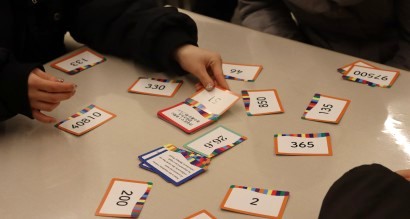
A karuta-style quiz game about Shibuya Ward's garbage problem.
Rules: In the first half (R1), a "question card" is read out loud, and participants must quickly pick up the "answer card (type of garbage)" that corresponds to the question. In the second half (R2), the rules are reversed, and participants must guess the question from the "answer card." The first and second halves are structured so that participants can face the garbage problem from different perspectives.
Features: The cards feature a "rainbow line" on the edge. By matching the rainbow lines on the question card and answer card, you can see at a glance whether you got it right or wrong, even without a referee. The cards are double-sided, so you can enjoy them in either Japanese or English.
The fear of littering
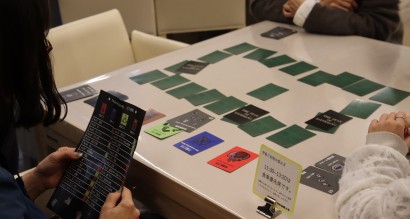
A card game based on Concentration that progresses based on Shibuya Ward's garbage sorting rules.
Rules: Players flip over a "garbage card" from the deck and sort and dispose of it correctly according to Shibuya Ward's garbage sorting rules. Similar to a game of concentration, players can find cards with the same sorting method as the flipped garbage card and earn points if they can correctly match them up. If a player draws a special "Litterer" card during the game, a garbage card will be added from the deck, increasing the amount of garbage on the table. If there is too much garbage and there is no room to put it, all players lose.
Special features: The special "Littering Man" card has an eerie design. The game is designed so that the more garbage cards you collect, the more difficult it becomes to separate garbage. This allows players to understand firsthand how increasing littering leads to a growing burden on society as a whole for waste disposal.